
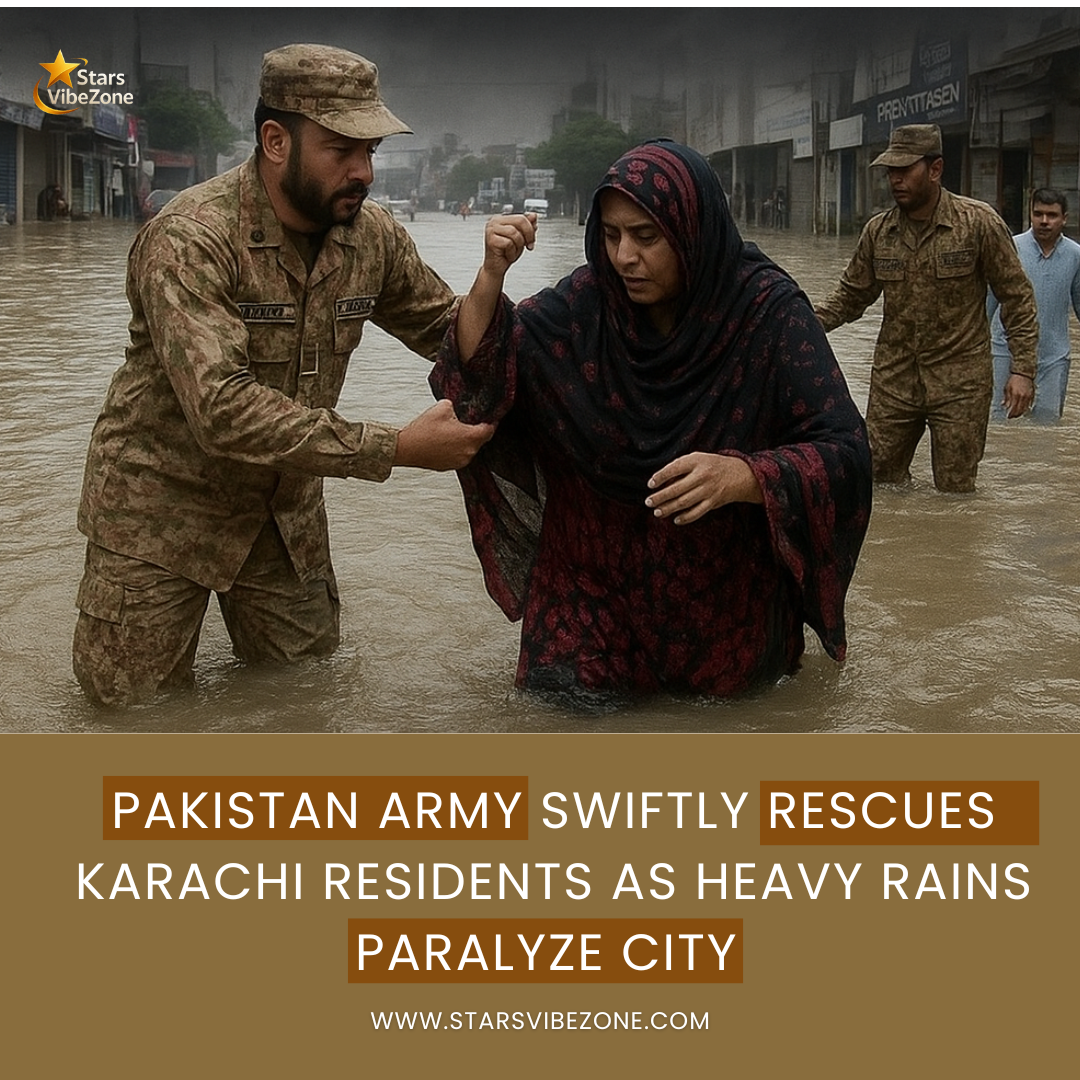
Heavy rains in Karachi caused flooding, but Pakistan Army’s swift rescue operations saved residents and restored traffic in key areas
Torrential Rains Disrupt Karachi Life
The monsoon downpour left key areas, including the M9 Motorway, Saima, and Saadi Town, submerged under several feet of water. Public transport came to a halt, commuters were trapped for hours, and families faced flooding in their homes. The overflowing drainage system further intensified the situation, highlighting Karachi’s recurring struggle with poor infrastructure.
Pakistan Army Leads Rescue and Relief Operations
Responding promptly, the Pakistan Army rescue teams were deployed across the city. Soldiers, in coordination with Pakistan Rangers Sindh and law enforcement agencies, evacuated stranded citizens, drained floodwater, and reopened blocked roads.
Eyewitnesses reported that families trapped on the M9 Motorway were safely relocated, while military personnel provided on-ground assistance to vulnerable groups, including the elderly and children.
A military spokesperson stated, “Our priority is the safety of Karachi’s residents. Rescue operations will continue until life returns to normal.”
Traffic and Services Restored
Beyond rescue efforts, the Army also assisted civic agencies in restoring traffic flow, clearing debris, and supporting damaged infrastructure. Their involvement enabled a quicker recovery for thousands of Karachi residents struggling with rain-related challenges.
Public Response and Social Media Reactions
Karachiites expressed gratitude for the timely intervention of the Pakistan Army. Social media platforms were flooded with appreciation posts, videos, and images showing uniformed personnel guiding citizens through knee-deep water. Many described the soldiers as the “real heroes” of the city during the crisis.
The Larger Challenge of Karachi Floods
Despite the immediate relief, experts warn that urban flooding in Karachi is a recurring issue. The lack of a modern drainage and sewerage system, combined with unchecked urbanization, makes the city vulnerable to collapse during every heavy rainfall. Analysts urge that long-term solutions, including sustainable infrastructure development and effective disaster management policies, are critical to prevent future crises.
